
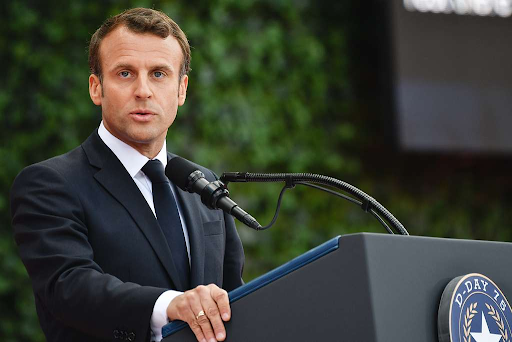
Emmanuel Macron does not do diplomatic ambiguity when children are concerned. At the AI Impact Summit in Delhi, the French president was blunt about what he sees as one of the defining failures of the current AI era: the weaponisation of technology against children. His message to the assembled world leaders and tech executives was simple — platforms, governments and regulators must work together, and that work must start now.
Macron was speaking in the immediate aftermath of high-profile cases involving AI-generated sexually explicit imagery of children, including the use of Elon Musk’s Grok chatbot to produce tens of thousands of such images. New research from Unicef and Interpol had just confirmed that this is not a marginal problem. Over 1.2 million children across 11 countries had been victimised by AI deepfakes in a single year, with some countries reporting that one in every 25 children had been affected. These figures helped frame what might otherwise have seemed like a policy debate as something far more urgent.
The French president drew a clear line between what he described as the misinformed criticism of European regulation and the reality of what that regulation seeks to do. The EU’s AI Act is not, he argued, an obstacle to entrepreneurship — it is a framework for ensuring that innovation serves people rather than exploiting them. He contrasted Europe’s approach with what he characterised as the Wild West model favoured by some American voices, where platforms are trusted to make good decisions and typically do not.
António Guterres and Narendra Modi gave Macron important backing from different directions. Guterres focused on the global governance deficit, warning that the most powerful technology in history cannot be left to a handful of private actors. Modi spoke about the need for AI that is child-safe and family-guided, and called for open-source development to prevent the kind of monopolisation that already defines the current landscape. Their convergence with Macron on child safety was one of the summit’s more meaningful moments.
Macron left Delhi with more than he came with — greater international attention on child safety in the AI era, and a clearer political mandate to pursue it through the G7. Whether that translates into meaningful policy change depends on what happens next. But the French president has made his position unmistakable: the internet must be safe for children, and achieving that safety is a job for governments, not just tech companies.