
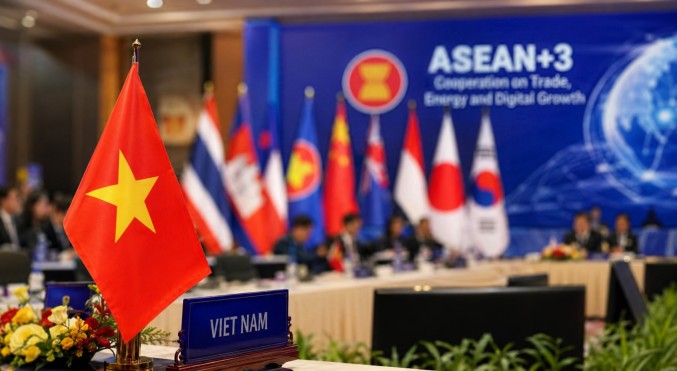
At the ASEAN+3 Foreign Ministers’ Meeting in Manila, Việt Nam called for enhanced economic integration and strengthened regional resilience. Foreign Minister Lê Hoài Trung urged the member countries of ASEAN, alongside China, Japan, and South Korea, to intensify cooperation in key areas including trade, connectivity, and sustainable development. His call to action focused on the critical need to effectively implement existing regional trade agreements and to broaden collaboration in various domains such as energy security, food security, digital transformation, and clean energy.
The minister highlighted the necessity of exploring regional mechanisms for energy cooperation to bolster resilience against potential economic and geopolitical challenges. This initiative is part of a broader strategy aimed at ensuring the region can withstand future adversities. The meeting underscored ASEAN+3’s pivotal role as a major platform for regional cooperation, with participating countries agreeing to expedite the implementation of the ASEAN+3 Work Plan from 2023 to 2027.
Key outcomes from the meeting included a collective commitment to enhance financial cooperation and expand regional food reserves. Additionally, the ministers endorsed initiatives focused on renewable energy, as well as increased investment in sectors such as education, technology, tourism, and cultural exchanges. These efforts are designed to solidify the region’s economic foundation and encourage sustainable growth.
In support of ASEAN’s central role in regional affairs, China, Japan, and South Korea reaffirmed their commitment to assisting in the advancement of the ASEAN Community Vision 2045. This pledge signifies a continued dedication to fostering a cohesive and resilient regional community capable of addressing both current and emerging challenges.