
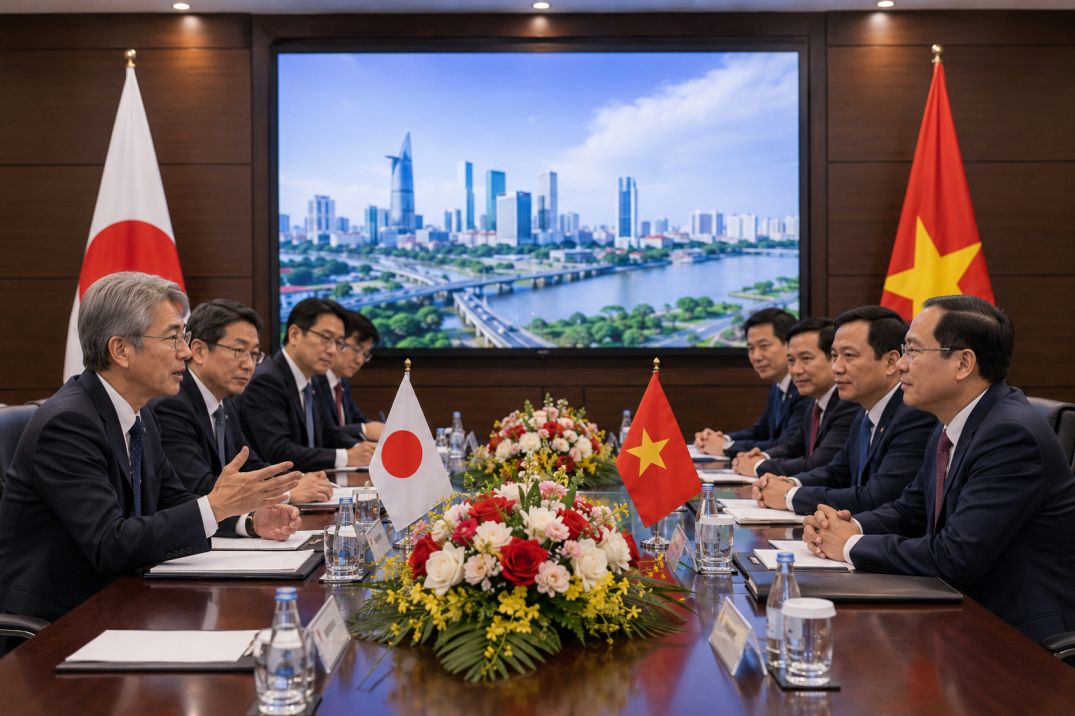
The Japan Bank for International Cooperation (JBIC) has reiterated its dedication to Vietnam’s long-term economic growth, focusing on significant infrastructure, energy, and technology projects. In a meeting with Vietnamese Prime Minister Lê Minh Hưng on Thursday, JBIC Governor Maeda Tadashi announced the bank’s commitment to advancing 15 projects under the Asia Zero Emission Community (AZEC) initiative, with a total investment of around $20 billion. Governor Maeda also promised continued backing for energy initiatives within the Partnership for Energy Resilience and Resource Asia (POWERR Asia) framework.
Prime Minister Hưng expressed appreciation for JBIC’s enduring collaboration and financial contributions to Japanese-supported projects in Vietnam. He noted the consistent advancement in Vietnam-Japan relations since the two nations elevated their relationship to a Comprehensive Strategic Partnership nearly three years ago. The prime minister emphasized that their cooperation now extends beyond traditional areas to emerging sectors like semiconductors, artificial intelligence, digital transformation, renewable energy, green technology, and space development.
Highlighting the potential for deeper bilateral collaboration, Prime Minister Hưng urged JBIC to enhance its role in mobilizing investments for strategic infrastructure and industrial growth. He encouraged the establishment of financing and investment guarantee mechanisms to support industrial clusters, innovation hubs, and high-tech manufacturing facilities throughout Vietnam. Furthermore, Hưng called for expanded support from JBIC for projects involving public-private partnerships, mergers, acquisitions, and technology transfer, as well as increased Japanese investment in high-tech industries including semiconductors, AI, batteries, advanced materials, and critical minerals.
Governor Maeda responded affirmatively, expressing robust support for Vietnam’s development priorities and agreeing with the proposals discussed. He highlighted that while Japan continues to be Vietnam’s largest source of official development assistance, private-sector investment will become increasingly crucial for sustaining economic growth. He noted that JBIC, drawing on its experience with public-private partnerships, is ready to enhance cooperation in attracting international financing and supporting long-term development goals.
Looking to the future, JBIC will maintain its collaboration with Vietnam to implement the remaining AZEC projects and support developments in power, oil, and gas to enhance the country’s energy security. Maeda also disclosed the bank’s efforts in fostering partnerships with third countries to build Vietnam’s semiconductor supply chains, AI ecosystem, and data center infrastructure. Additionally, JBIC is actively supporting Vietnamese startups through venture capital initiatives and exploring opportunities for collaboration on the Vietnam International Financial Centre and broader cultural exchange programs, underscoring the deepening economic partnership between Vietnam and Japan.