
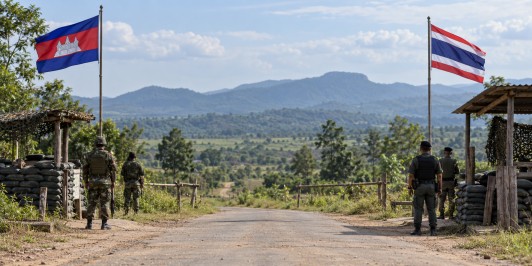
The recent ceasefire agreement between Cambodia and Thailand is under scrutiny as Cambodia warns that it should not be used to alter international borders or ownership of disputed territories. Cambodian Information Minister Neth Pheaktra emphasized the importance of maintaining the status quo along the contentious border, highlighting the ceasefire’s role in facilitating the safe return of over 20,000 displaced civilians.
Under the agreement reached in December, both nations committed to keeping their military positions unchanged as of the ceasefire’s commencement on December 27. However, Pheaktra accused Thai forces of attempting to change the situation on the ground by reinforcing their positions with barbed wire, trenches, and new military facilities in areas claimed by Cambodia. This, he argues, contravenes the spirit of the agreement meant to stabilize the region.
The border tensions have drawn international attention, with Thailand inviting foreign delegates, ASEAN observers, and journalists to inspect areas near the contested border. These visits included locations such as the O’Smach casino area and Choam crossing. Thailand has used these opportunities to present concerns about alleged cross-border criminal activities and the utilization of casino buildings on the disputed land.
Cambodia, however, disputes Thailand’s claims of control over these territories, asserting that they rightfully belong to Cambodia. The differing interpretations of the ceasefire’s implications underscore the ongoing complexity of the border dispute, which remains unresolved despite efforts to maintain peace in the region.
As the situation unfolds, the focus remains on ensuring the ceasefire respects existing boundaries and allows displaced communities to return safely. Both nations face the challenge of navigating their historical disagreements while preventing further escalation of tensions.