
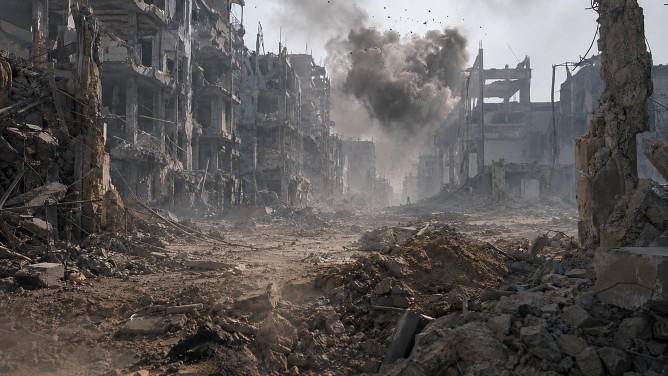
The ongoing military operations and occupation by Israel in southern Lebanon are exacerbating the division between Hezbollah and the Lebanese government. As a result, many communities find themselves navigating between different sources of security and support. For years, Hezbollah has developed an extensive social service infrastructure that includes housing, healthcare, education, and financial aid, providing crucial assistance to families impacted by conflict. These services have become even more vital for those displaced by recent hostilities, particularly as Lebanon’s financially strapped government struggles to offer similar support.
In response, the Lebanese government is making efforts to assert state authority and rebuild public confidence, especially in regions historically under Hezbollah’s influence. The Lebanese army has been tasked with reconstruction and infrastructure projects in areas reclaimed from Israeli control, aiming to increase the presence and visibility of government institutions in these local communities. Nevertheless, the state faces considerable hurdles, with continued Israeli military actions in southern Lebanon undermining public trust in the government’s capacity to protect its citizens. While some residents critique the government for inadequate responses, others hold Hezbollah accountable for the recurring cycles of conflict.
Lebanese officials emphasize that regaining the trust of Hezbollah’s supporters will require more than just security measures. They argue that the government must enhance public services, foster political inclusion, and provide economic opportunities if it hopes for communities to rely fully on state institutions. This complex situation also affects efforts to disarm Hezbollah, as Lebanese authorities are under pressure to consolidate state control over weapons without appearing to align with Israel against southern Lebanon’s communities.
Officials caution that substantial restoration of state authority will be challenging as long as Israeli military actions and occupation persist in southern Lebanon. Until these conditions change, many residents continue to view Hezbollah as a more dependable provider of protection and assistance compared to the Lebanese state, which is hindered by financial constraints.