
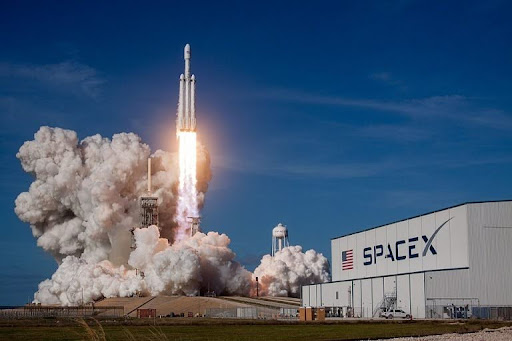
SpaceX has officially entered the public market with a highly anticipated initial public offering (IPO), setting a new milestone as one of the largest in history. The aerospace giant commenced trading at an initial price of $150 per share, which rapidly escalated, propelling the company’s valuation to exceed $2 trillion by the close of its first trading day.
This remarkable surge in SpaceX’s share price has notably augmented the wealth of its CEO and principal shareholder, Elon Musk. His net worth is now estimated to surpass $1 trillion, making him the world’s first trillionaire. The impressive market debut underscores strong investor confidence and enthusiasm, driven by the company’s pioneering efforts in space exploration and its satellite internet business.
During the IPO, shares soared as demand from investors far surpassed initial projections, emphasizing the market’s eagerness for SpaceX’s innovative ventures. Company leaders reiterated their commitment to the long-term goal of advancing human presence beyond Earth, highlighting the mission of expanding space travel capabilities.
Interestingly, SpaceX’s IPO diverged from traditional practices by presenting a fixed initial share price instead of a conventional price range. Reports of substantial investor interest before trading began likely contributed to the swift increase in valuation as the stock hit the market. Despite the strong debut, SpaceX remains in the red, with recent financial disclosures revealing significant operating losses, even as revenue shows growth. Analysts attribute these losses to the company’s substantial investments in aerospace infrastructure and satellite networks.
The unprecedented valuation of SpaceX has also sparked discussions about market concentration and associated risks, particularly in light of the company’s scale and the considerable voting control held by Musk. As SpaceX continues its trajectory in the public eye, these factors will remain points of close attention and debate among market observers.